SSP Engineering Home

Category

Practical Guides

22 articles

When Steel Runs Colder Than Air: A Winter Welding and Coating Regime

When Steel Runs Colder Than Air: A Winter Welding and Coating Regime

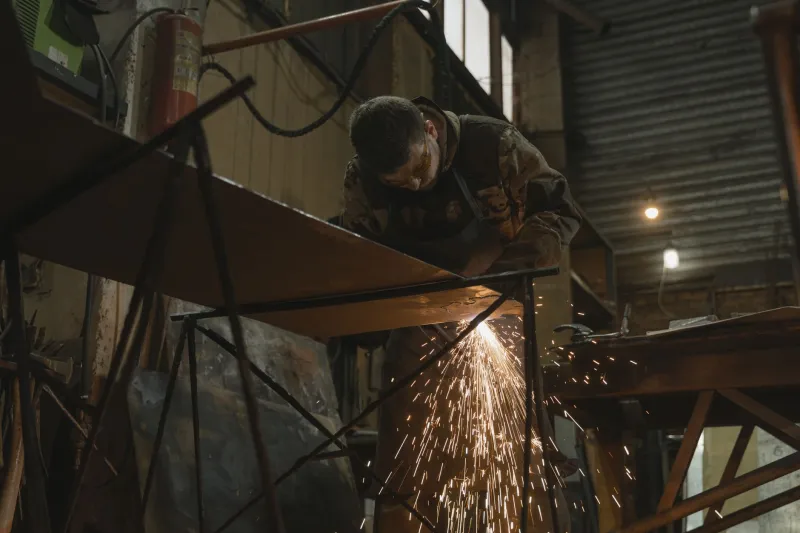
Cold weather rarely announces itself with frost. It arrives as a two-degree gap between steel and dew point, a draught across an open-sided structure, and a crew told to crack on. This guide sets out the winter checks that belong in the morning briefing and the records that keep them honest.

The Space Between Arrival and Assembly: A Storage Standard for UK Machined Parts

The Space Between Arrival and Assembly: A Storage Standard for UK Machined Parts

A goods-in inspection can pass a component and still leave it vulnerable. This guide sets out a storage regime for UK machine shops and fabricators, covering VCI packaging, dunnage, dew-point awareness, racking and FIFO discipline, inspection intervals, and purchase-order clauses that make the finish survive the wait.

Reality Has No Revision Cloud: Fixing the Dimensional Basis Before a UK Retrofit

Reality Has No Revision Cloud: Fixing the Dimensional Basis Before a UK Retrofit

Retrofit fabrication rarely fails because the steel is badly made. It fails because the drawing, the survey and the existing structure were never brought onto one agreed dimensional basis. This guide sets out a practical pre-fabrication survey routine for UK refurbishment work, from interface measurement to sign-off and tolerance transfer.

The Even Bloom: Detailing Weathering Steel for British Rain and Sheltered Elevations

The Even Bloom: Detailing Weathering Steel for British Rain and Sheltered Elevations

Weathering steel is often sold as a low-maintenance finish, but British rain, prevailing winds and sheltered elevations can produce uneven patina and run-off staining. This practical guide sets out a detailing protocol covering orientation, drainage, fasteners, welds, protection of adjacent materials and realistic handover expectations.

The Nut Behind the Certificate: A Shop-Floor Regime for Fastener Batches

The Nut Behind the Certificate: A Shop-Floor Regime for Fastener Batches

Fasteners are the most handled and least tracked items in many fabrication shops. This guide sets out a batch-level regime for receiving, kitting, storing and reconciling structural bolts, nuts and washers so that certificates, physical parts and project records remain aligned.

Design the Void: A Vent and Drain Protocol for UK Hot-Dip Galvanizing

Design the Void: A Vent and Drain Protocol for UK Hot-Dip Galvanizing

Vent and drain holes are frequently added after the fabrication drawing has been released, or worse, drilled on site after a coating has failed to form. This practical guide sets out a pre-release protocol for UK fabricators: model the air path, set the drain gradient, size the holes deliberately, and carry the detail through to inspection.

Paper Trails and Bench Copies: Revision Control Where the Work Actually Happens

Paper Trails and Bench Copies: Revision Control Where the Work Actually Happens

Most fabrication businesses can produce a transmittal log on request. Fewer can say with confidence which revision is taped to the saw. This guide sets out a bench-level regime for drawing control, covering controlled print stations, revision stamps, hold points and the retrieval of superseded copies before they reach the shop floor.

Naming the Seam: Why a Weld Map Should Exist Before the NDT Technician Arrives

Naming the Seam: Why a Weld Map Should Exist Before the NDT Technician Arrives

Non-destructive testing is only as defensible as the paperwork that precedes it. This guide sets out how UK fabricators can number every joint, link it to its procedure, welder, consumables and repair history, and hand over a weld register that still answers questions years after the shop floor has moved on.

The Stock You Leave Behind: Machining Allowance for UK Welded Fabrications

The Stock You Leave Behind: Machining Allowance for UK Welded Fabrications

Machining allowance is often treated as a nominal figure added to a drawing, yet welded fabrications rarely arrive at the milling machine in nominal condition. This guide examines how stock, stress and datum transfer interact, and sets out a practical handover checklist for UK buyers and fabricators.

The Inspector's November: Measuring Light Before It Measures the Weld

The Inspector's November: Measuring Light Before It Measures the Weld

Shorter days and low sun angles can quietly change what a fabrication inspector is able to see. This practical guide sets out a November-to-February lighting audit for UK bays, covering lux levels, colour rendering, glare, shadow control and the records that keep winter inspection decisions comparable with summer ones.

Built to Be Taken Apart: A UK Steelwork Checklist for the Second Life

Built to Be Taken Apart: A UK Steelwork Checklist for the Second Life

Bolted steelwork is often described as inherently demountable, but the detail determines whether it can actually be released after years in service. This practical checklist covers fastener access, interface corrosion, lifting points and the handover records that make future dismantling predictable.

Cradles, Lugs and Route Surveys: Making Transport Part of the Specification

Cradles, Lugs and Route Surveys: Making Transport Part of the Specification

A fabrication can pass every dimensional check at the works and still arrive on site distorted, scuffed or unsafe to offload. This guide argues that packaging, lifting points and transport planning should be treated as engineering deliverables, agreed at quotation stage and proven before dispatch.

The Setup You Cannot See: A Quotation-Stage Guide to Jigs and Fixtures

The Setup You Cannot See: A Quotation-Stage Guide to Jigs and Fixtures

Jigs, fixtures and shop-floor aids are often treated as a production detail rather than a commercial one. This guide argues that fixture thinking belongs in the fabrication quotation, with a practical checklist for identifying work that needs dedicated tooling before the first cut is made.

Proof in the Hand: A Pre-Order Coupon Protocol for UK Metalwork Buyers

Proof in the Hand: A Pre-Order Coupon Protocol for UK Metalwork Buyers

A small paid sample, properly specified and assessed, can reveal fabrication risks that drawings, CAD models and quotations leave hidden. This guide sets out a practical pre-order coupon protocol for UK buyers and fabricators, from scope and inspection through to using the sample as a production benchmark.

The Quotation Clock: Why Delivery Certainty Deserves Equal Billing with Price

The Quotation Clock: Why Delivery Certainty Deserves Equal Billing with Price

A price-only estimate leaves the client to guess at the programme, and guesswork is expensive. This guide sets out how UK precision engineering firms can publish a transparent weeks-and-pounds breakdown with every quotation, from material call-off through to packing, and why that transparency increasingly wins work over the lowest unit rate.

Thin Walls, Long Shadows: A Heat-Input Playbook for Thin-Gauge Fabrication

Thin Walls, Long Shadows: A Heat-Input Playbook for Thin-Gauge Fabrication

Enclosures, guards, covers and architectural metalwork share a common failure mode: distortion in material too thin to forgive it. This guide sets out a repeatable method covering fit-up, tack sequence, current and travel speed, clamping and post-weld correction, with a first-off approval checklist.

Mill Certs and Measurement: A Procurement Companion to Quality Documentation

Mill Certs and Measurement: A Procurement Companion to Quality Documentation

Inspection reports and material certificates are frequently filed without being read, yet they are among the most reliable indicators of how well a job was controlled. This guide explains what UK buyers should expect to receive, how to spot documentation that does not stand up, and which questions to put to a supplier.